There’s no shortage of video out there. Businesses are making videos. Nonprofits are making videos. Videos are everywhere on websites, social media and advertising. But making a video and making a video that actually connects with people are two very different things. I’ve worked in video production for over 15 years, and one thing I’ve learned is that the best videos rarely start with a camera. They start with an idea. Sometimes it’s a problem that needs to be solved. Sometimes it’s a story worth telling. Sometimes it’s simply a question: “How do we get people to care about this?”
Whatever the starting point, the important work begins long before we start shooting. I often say, “A successful video isn’t created in the editing room. It’s created in the planning room.” Long before we ever pick up a camera, we should understand what we’re trying to accomplish, who we’re trying to reach and why the story matters. That doesn’t mean everything is predetermined. Far from it. Some of the best moments are the ones you never saw coming. But you need to know where you’re going before you can recognize those moments when they happen.
Start With Your Audience
One of the first questions I ask when we start a new video project is, “Who are we talking to?” It sounds obvious, but it’s easy to lose sight of. Organizations naturally want to talk about themselves. Their history. Their services. Their accomplishments. The things they’re proud of. There’s nothing wrong with any of that. But the person watching the video is probably asking a different question:
“Why should I care?”
Before deciding what we want to say, we need to understand who we’re saying it to. What matters to them? What problem are they trying to solve? What do they already know? What might make them stop and pay attention? Whether we’re creating a corporate video, a nonprofit story, a commercial or a testimonial, the audience should never be an afterthought. They’re the reason we’re telling the story in the first place.
Information Isn’t the Same as Story
Once we understand the audience, the next question is, “Where’s the story?” Facts matter. Numbers can show the scale of an impact. A list of services can explain what an organization does. Accomplishments can establish credibility. But facts alone don’t necessarily create a connection.
There’s usually a human story underneath them. Find it.
How have people been impacted?
What changed?
What was difficult?
Why did it matter?
Those questions tend to lead somewhere much more interesting.
This is especially important in nonprofit video production. I’ve worked with organizations doing incredible work, and understandably they want people to know about that work.
But sometimes the strongest film isn’t really about the organization. It’s about the people you serve. Let your audience meet them. Let them understand something about their lives. Let them see what changed. Now the impact of your organization isn’t simply something your audience is being told about.
They can see it.
They can feel it.
The same principle applies to corporate video production. A company may want to talk about its capabilities, technology or years of experience. All of that can be important. But perhaps the more interesting story is the employee who has spent 25 years perfecting a craft. The customer whose problem needed solving. The family business trying to build something that will still matter to the next generation. That’s where things start getting interesting.
Emotion Gives People a Reason to Care
The stories we remember usually make us feel something. They might make us hopeful. Make us laugh. Surprise us. Sometimes they simply help us see another person differently. When people connect emotionally with a story, it stays with them. More importantly, that connection can move them to do something.
For a nonprofit, that might mean donating or getting involved. For a business, it might mean building trust or choosing a product or service. For a recruitment film, it might mean thinking, “I could see myself working there.”
The goal isn’t to manufacture emotion. People can usually feel when they’re being pushed.
The emotion needs to come from the story itself. Our job is to find what’s real and tell it well.
Real People Are Usually More Interesting Than Scripts
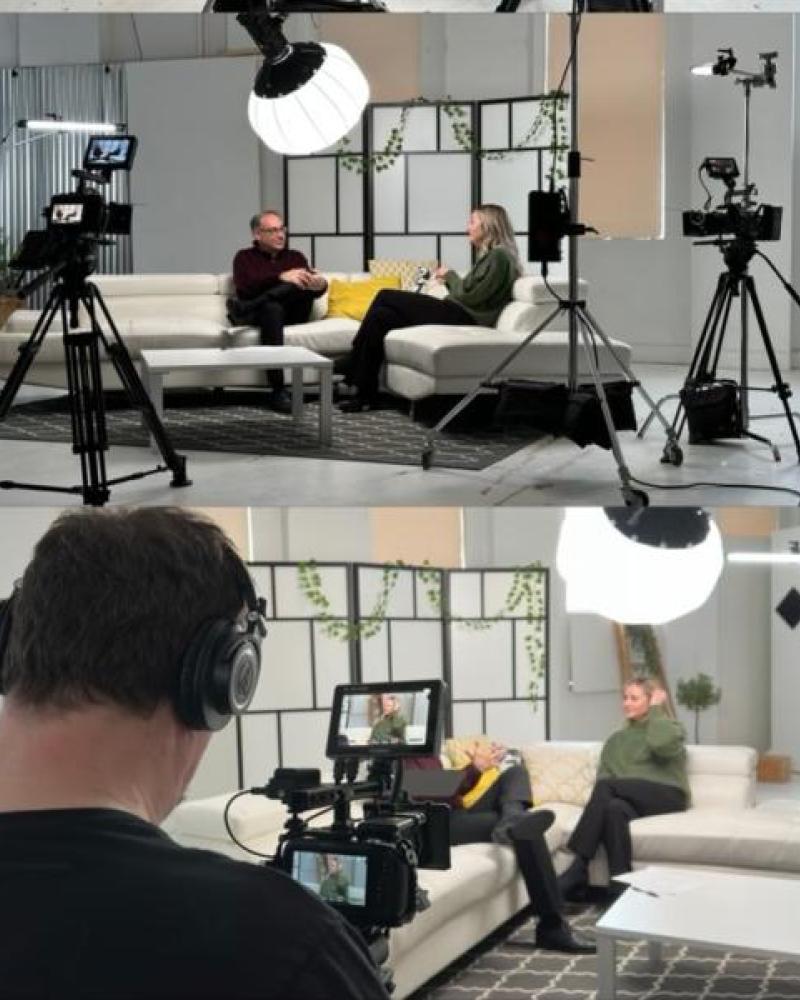
I love interviews. I’m not looking for somebody sitting in a chair giving me perfectly polished answers. Sometimes the polished answer is the least interesting one. I’m looking for the real answer. That means listening.
I may have 20 questions in front of me, but if somebody says something interesting, I’m going there. The next question becomes more important than the list. Sometimes someone pauses. Their expression changes. They remember something. They laugh. Or they say something you weren’t expecting. That’s often where the story is.
You can’t manufacture those moments. My job is to create the conditions where somebody feels comfortable enough to forget about the camera and simply talk to me. Perfect isn’t always better.
Believable usually is.
That approach is especially important when we’re creating testimonial videos or interview-driven stories. The strongest moments are often the ones nobody could have written beforehand.
Production Quality Still Matters
Story comes first, but craft matters. Lighting, sound, composition, camera movement, editing and music all shape how a story feels. So do the people behind the camera. Some productions need a director, multiple camera operators, a gaffer, sound recordist and other specialists. Others are better served by a small crew.
The goal isn’t to make the production as big as possible. It’s to give the story what it needs.
The same applies to equipment. A great camera doesn’t automatically make a great film. Neither does an expensive light or the latest piece of gear. Those are tools. The decisions behind them are what matter.
If we’ve done our jobs well, the audience probably isn’t thinking about the camera, the lighting or the edit. They’re thinking about the story.
Know What You Want the Video to Do
A commercial, corporate video, testimonial, recruitment film, nonprofit story and documentary all have different jobs. But they all need a clear purpose. What do we want someone to think, feel or do after watching? Maybe we want them to donate. Apply for a job. Buy something. Understand an issue. Trust an organization. Start a conversation. We don’t need to say everything. We need to say the right thing.
At Orange House Media, we’ve worked with businesses, nonprofits and organizations across Winnipeg and beyond, and every project is different.
But I keep coming back to the same questions:
“Who are we talking to?”
“Why should they care?”
“Where’s the story?”
Answer those questions first. Then make the film.
Have a story to tell?
Let’s talk about how to tell it. Book a Free Consultation